
Fire Salamanders: Frankie & Georgie, October 2026
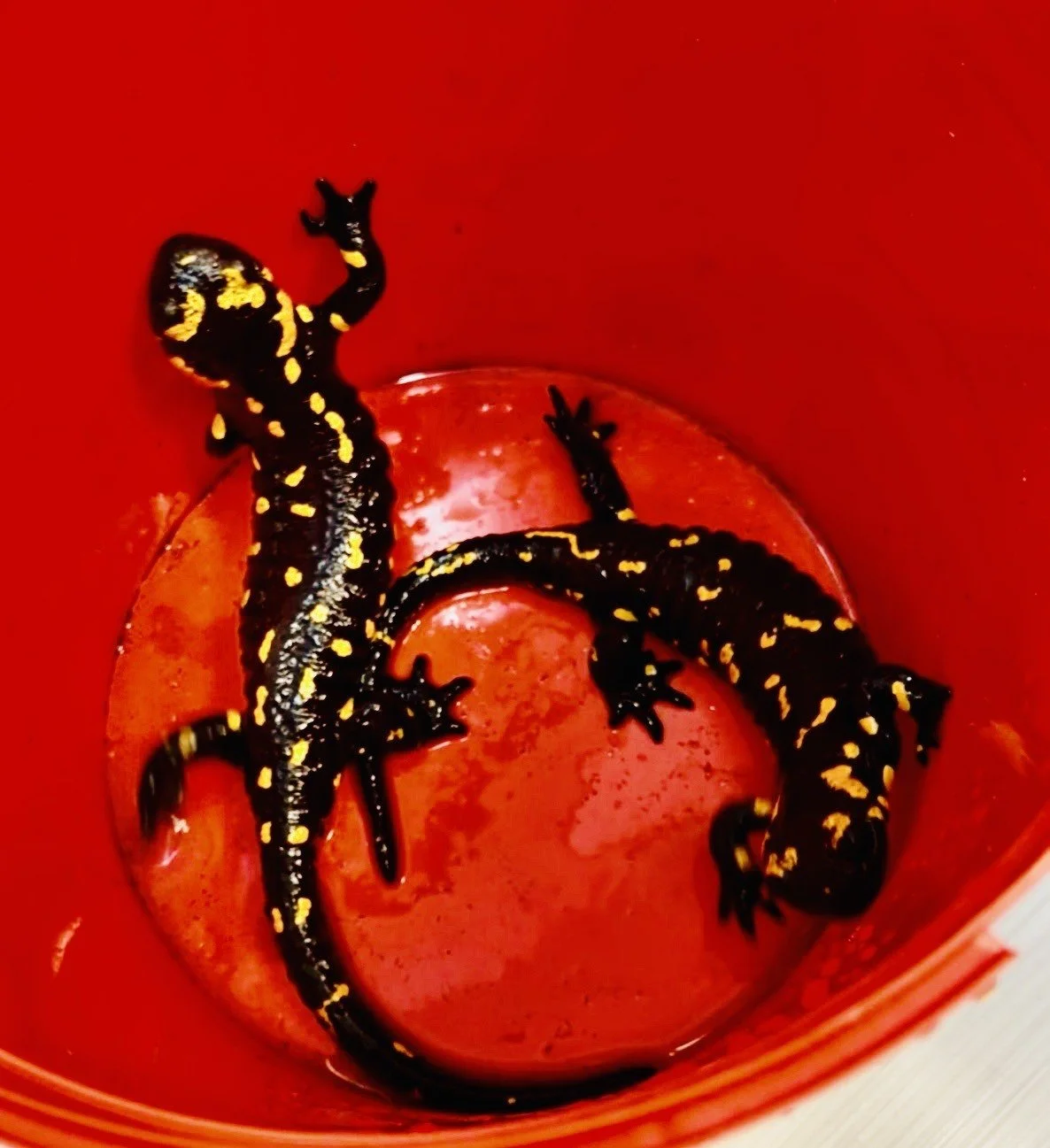
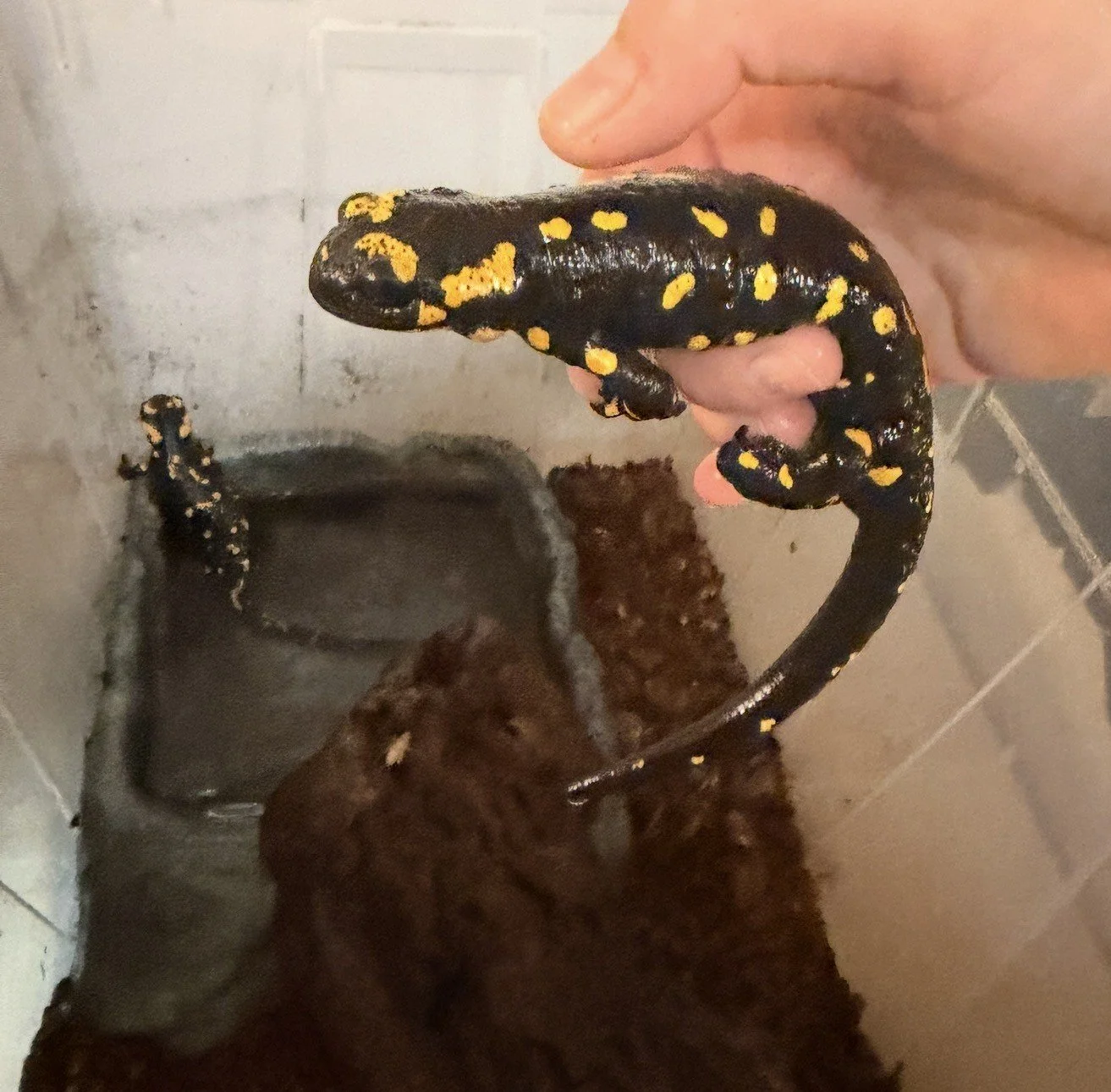
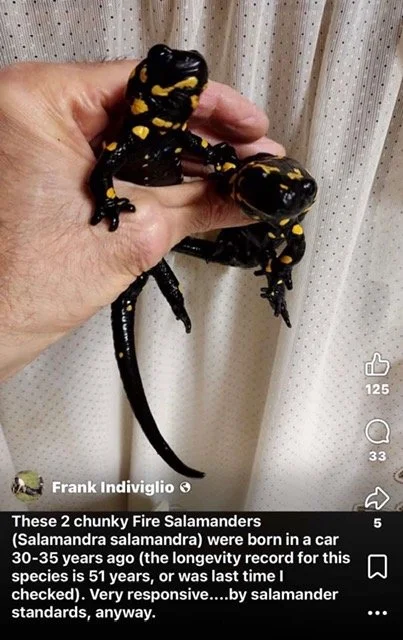
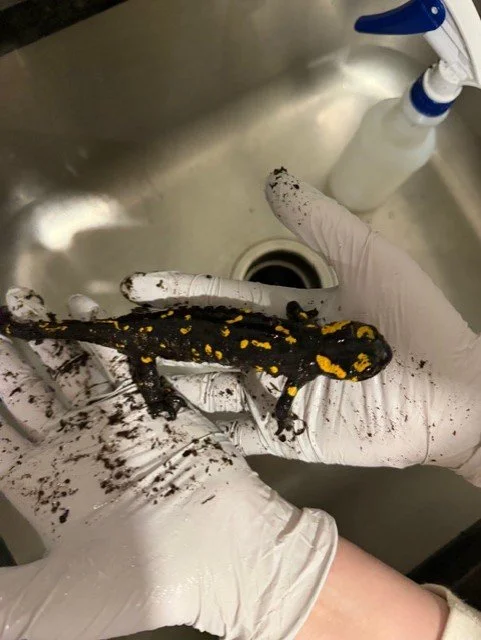
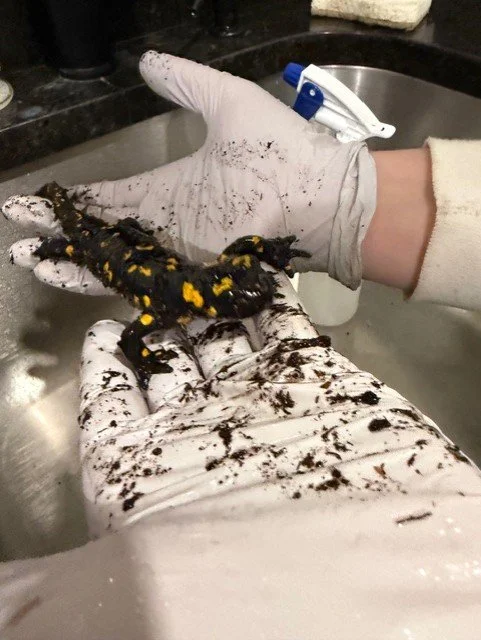
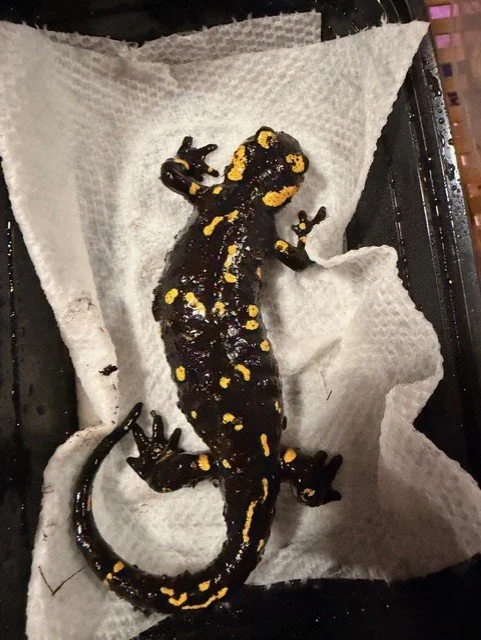
Born during a truck ride in the Bronx in the 90’s, these sister salamanders are unusual compared to other species of salamander because they undergo no larval phase in a vernal pond but instead emerge from their mother like tiny adults.
Once popular in the pet trade, captive bred fire salamanders have become increasingly rare due to an outbreak of chytrid fungus in their native European ranges, likely the result of the import of Asian amphibians in the pet trade. In 2014, a survey done of waterways in France and Spain where fire salamanders and other brightly colored amphibians of note originate had their populations reduced to 1% of their former numbers making them functionally extinct in the wild.
Frankie and Georgie came to us from a former Bronx zoo keeper’s private collection, where we discovered they’d been living for approximately 30 years without issue. The longest lived adult in captivity was approximately 50 years old. Females of this size are unheard of, and to allow them to remain ‘display animals’ doesn’t do their species any good. After six months in quarantine, these lovely ladies were sent to live with an experience amphibian keeper who has had good success breeding fire bellied toads, another tricky amphibian which almost disappeared from the captivity in the last 20 years.
With some luck, these two still have it in them to contribute their genetics and produce offspring, the hope being that they can bolster a dwindling population of amazing, peaceful animals and keep them on our planet for a little longer.
Operation Soft-Shell:
Central Park Turtle Pond
In the heart of Central Park is the Central Park Turtle Pond, a natural area adjacent to Belvedere Castle where dozens of aquatic turtles eat from the hands of tourists.
Many of these animals are actually abandoned pet turtles—red eared sliders, to be exact. Red eared sliders are considered invasive on every continent in the world (besides antarctica) and is only truly native to a small portion of southern states in North America. Most turtle species are in steep decline while others are in danger of extinction, RES thrive and conquer wherever they are dumped due to aggressive and tenacious qualities they adapted over centuries of living in competition with other large turtles, alligators and crocodiles.
BThe reason for their abandonment in such large numbers has many contributing factors.
In captivity, aquatic turtles can be complex and expensive to keep, especially as they age. Red eared sliders start small and adorable, are inexpensive to purchase, and don’t need much space at the start.
can live to be 40-50 years old, growing to the size of a dinner plate. Proper care includes a large aquatic environment, (ten gallons for every 1 inch of carapace,) a basking platform with a hot spot of 85-95 degrees, high quality UVA/UVB and 12 hour light/dark daily cycle.
We align technical insight with disciplined execution to provide measurable gains across operational, financial, and strategic domains.